
~$66,900 - The most expensive Evangelion cel ever?
Rei Ayanami's most famous smile in Evangelion, from the 1997 film DEATH & REBIRTH. There have been twenty public sales of this scene since 2015, but how many were production cels?
Rinkya Authentic · November 2026
Rinkya's Evangelion Production Art Sales History 2012 - now
If you bought an Evangelion cel in 2012, the average price was $223. Today, 14 years later, the average cost is $2,476, an increase of 1,010%.
Twenty sales of the same scene since 2015. Which ones are the production cels? See if you can pick them out without scrolling.
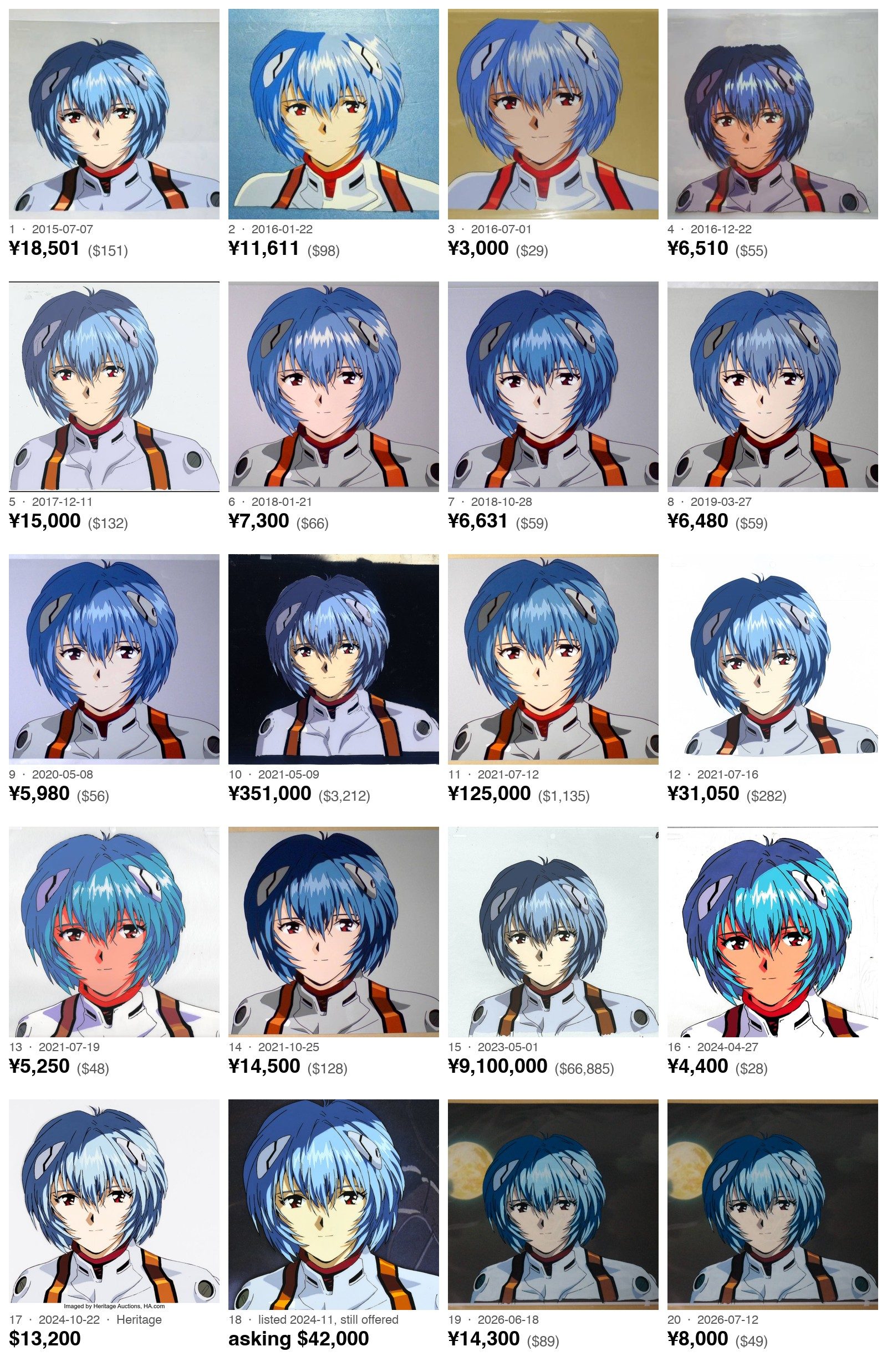
Do you have your answers? How did you come up with them?
Reveal
If you can read Japanese, you'd see 17 of them were listed as 同人 (fan-made), 複製 (reproduction), 販促用 (made for promotion) or アニメの制作に使用したセル画ではありません (not a cel used to make the anime).
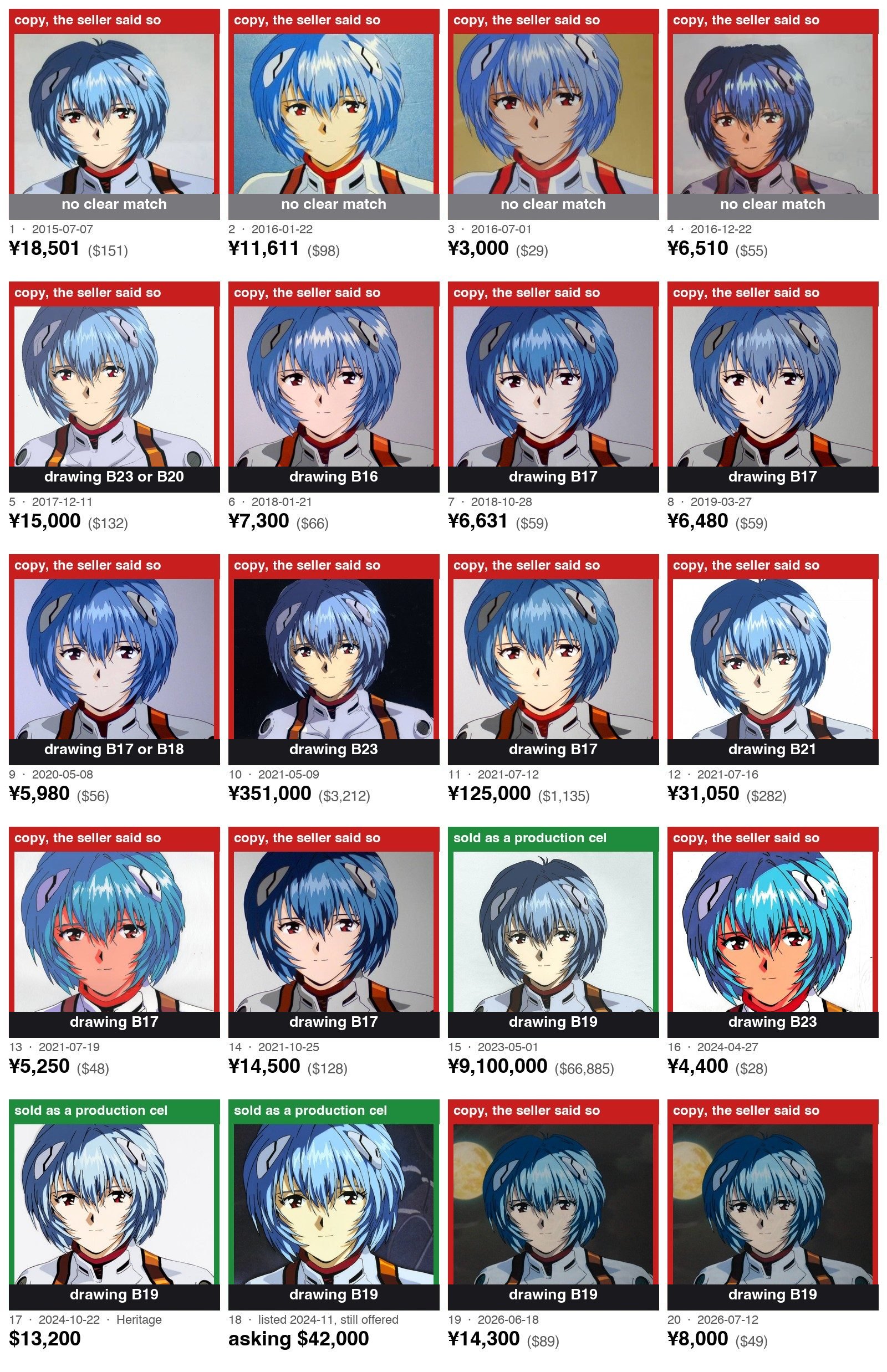
Reading the listing can save you from a big surprise.
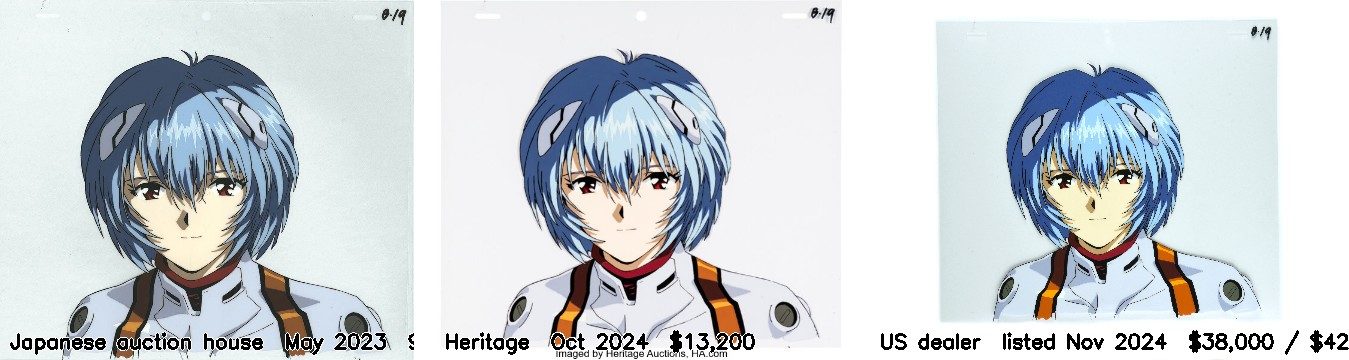
Three of these listings were sold or offered as production cels: one at a Japanese auction in 2023, one at Heritage in 2024, and one by a US dealer since. Let's take a closer look.
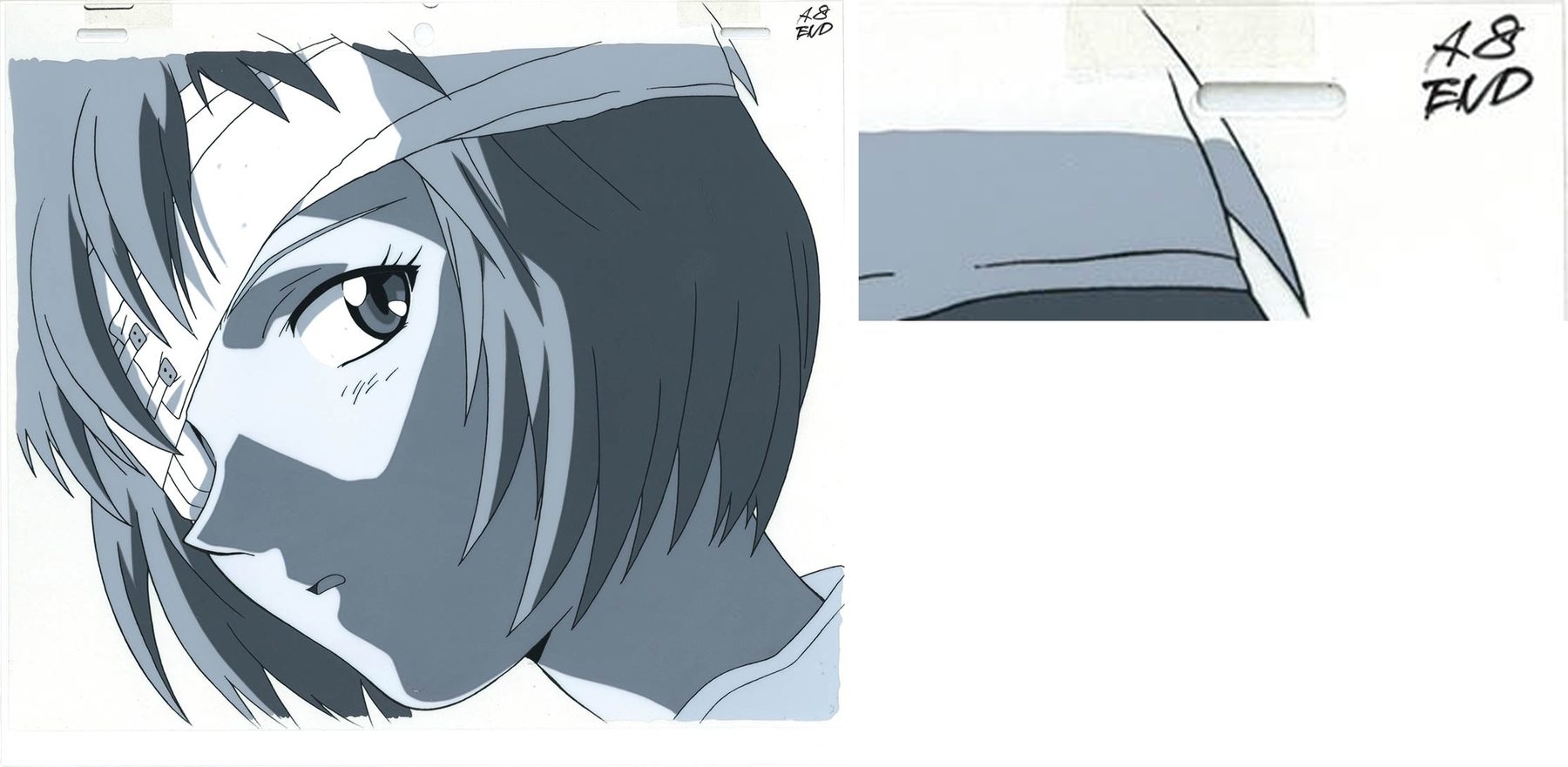
The corner shows the cel number.
All three show the same top right corner, peg holes along the edge and the cel number: "B·19" in black pen. It looks like the same handwriting in each one. Could this be the proof it is a production cel?

Maybe, and here is why it's only a maybe.
Gainax sold its own reproduction cels, identical to production
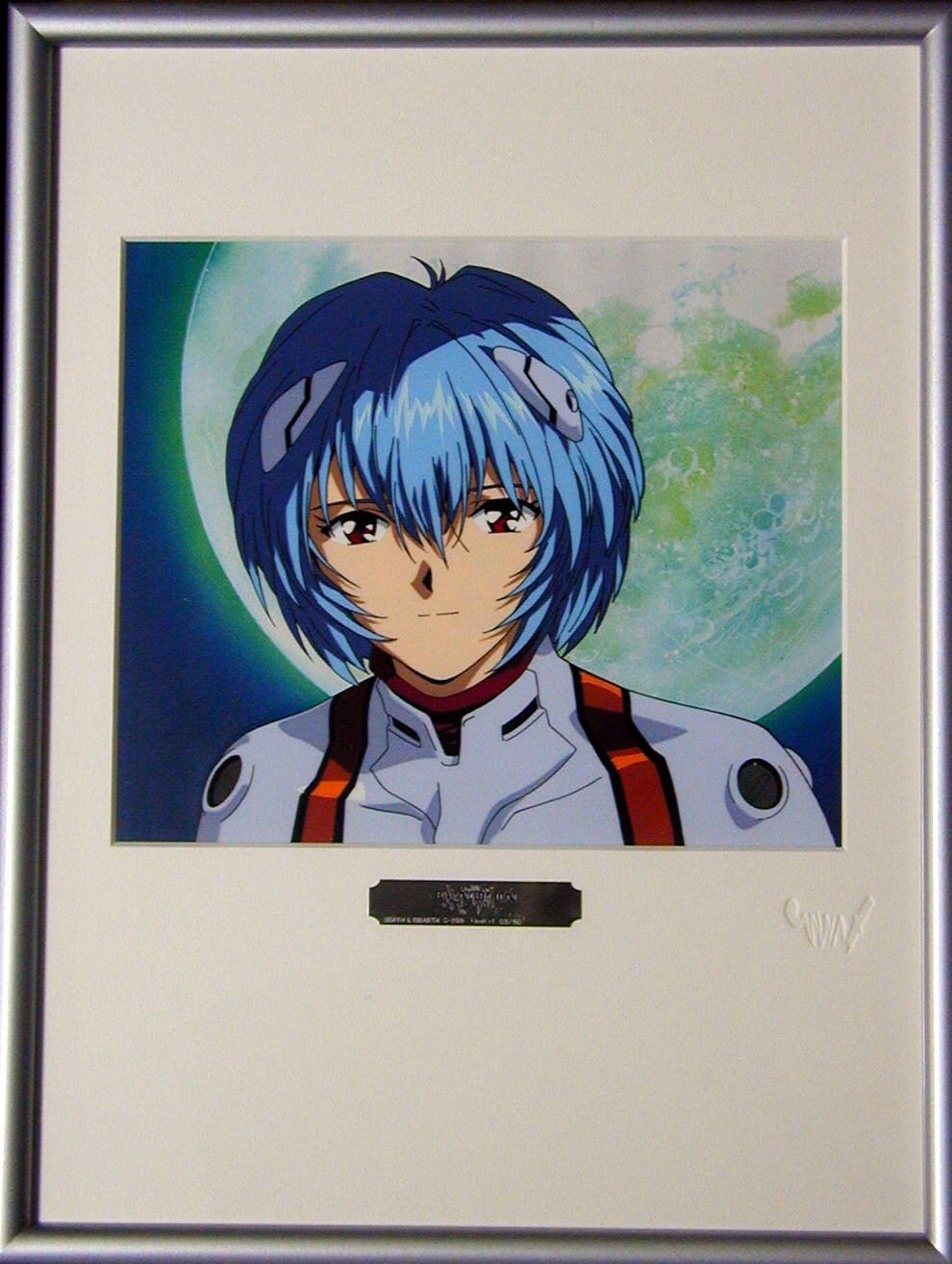
From 2001 to 2003, you could order 複製セル画 (fukusei seruga) from Gainax by mail. These were hand-painted from the film's actual douga and came with a numbered plate, a certificate with the buyer's name, a frame, and a box. They sold for ¥28,000 to ¥120,000 (about $225 to $970). This famous smile scene was one of them: plate C-298, one out of fifty.

Many owners kept them sealed in their frames, but in September 2026, a Rei from the reproduction series appeared on a Japanese auction for ¥205,000 (about $1,330), taken out of its frame. If you didn't know any better, you'd think it was a production cel.
SEGA released cheaper reproduction cels too.
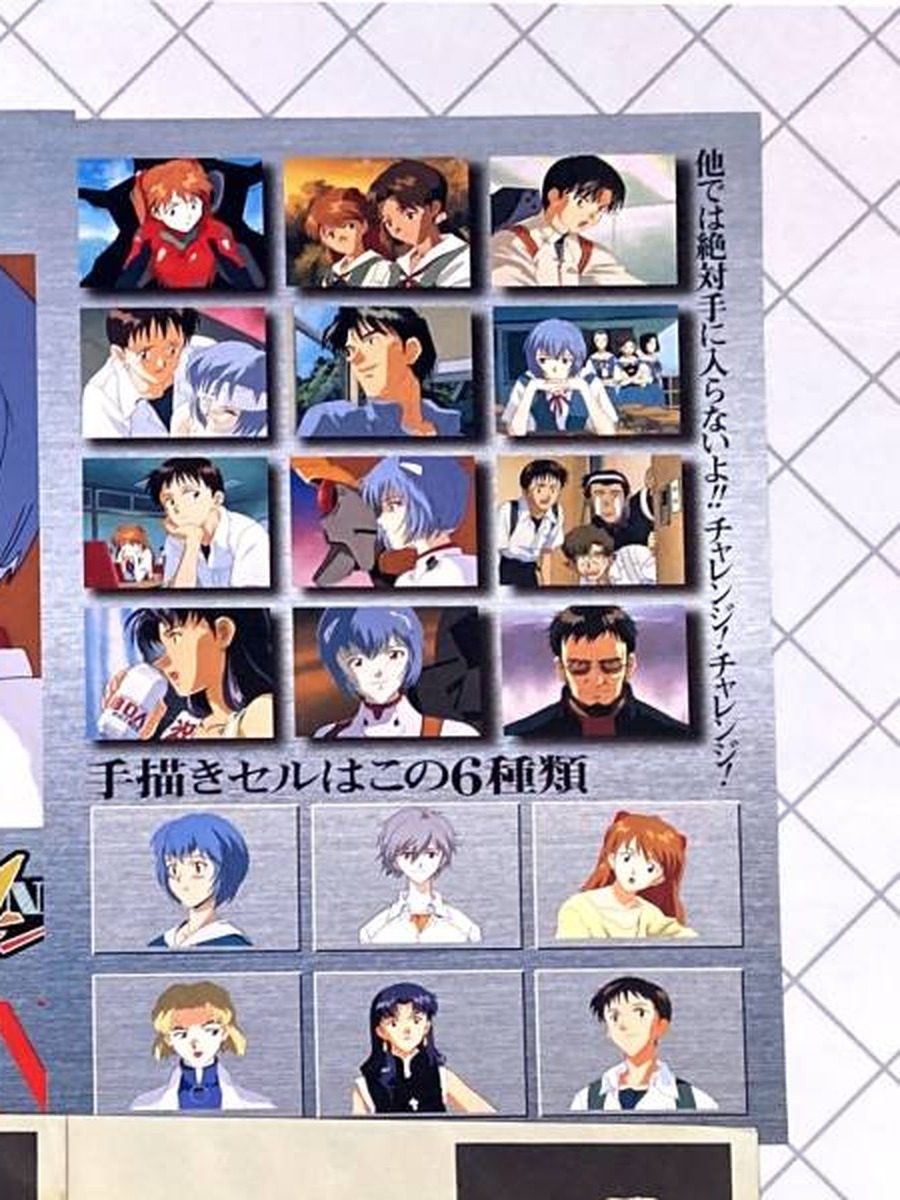
There were SEGA's Cellu Club cels, arcade prizes from 1997 and 1998. There were twelve printed designs and six hand-painted ones. Today the printed ones sell for ¥1,000 to ¥3,000 and the hand-painted for ¥10,000 to ¥31,500 (about $6 to $200).
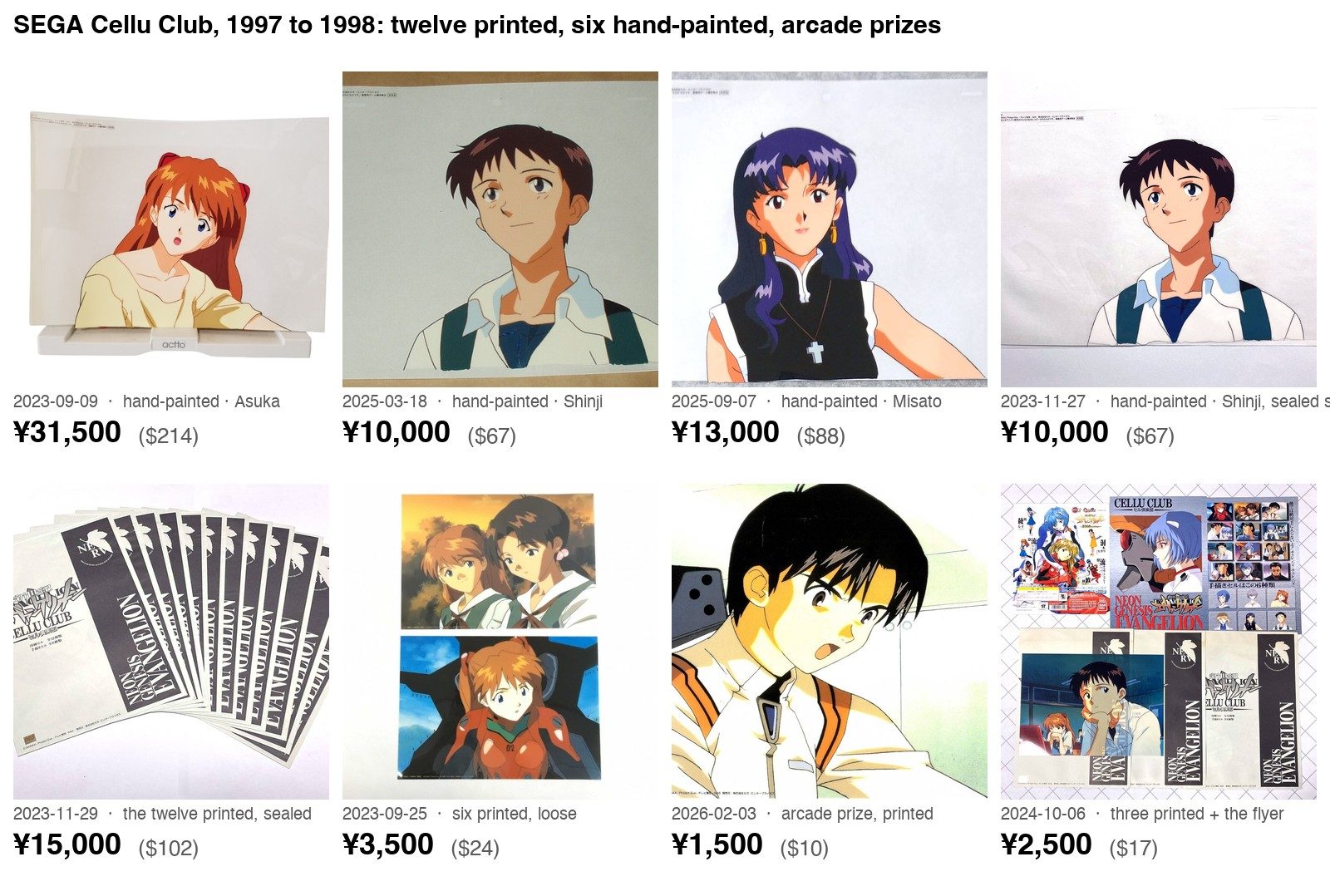
Those you can tell apart, though, because every SEGA cel has a printed strip along the top with the copyright, SEGA, "prize for game machines, not for sale," and no peg holes.

Since 2001, anyone with this reproduction cel had a copy of the douga, because all fifty Rei smile reproductions came with an exact replica of it. The reproduction was the B(23) END frame, which is the last drawing in the cut.
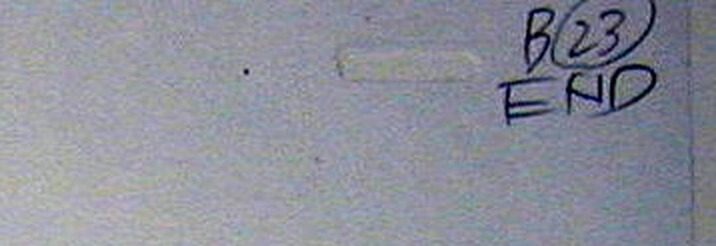
How many cels were there in this cut?
If the last drawing says B23 END, there were 23, and we can corroborate that with the actual film. This shot runs 5.88 seconds and uses exactly 23 drawings. The finished smile at B23 stays on screen 2.67 seconds, longer than the other 22 together. That's the one Gainax chose to reproduce.
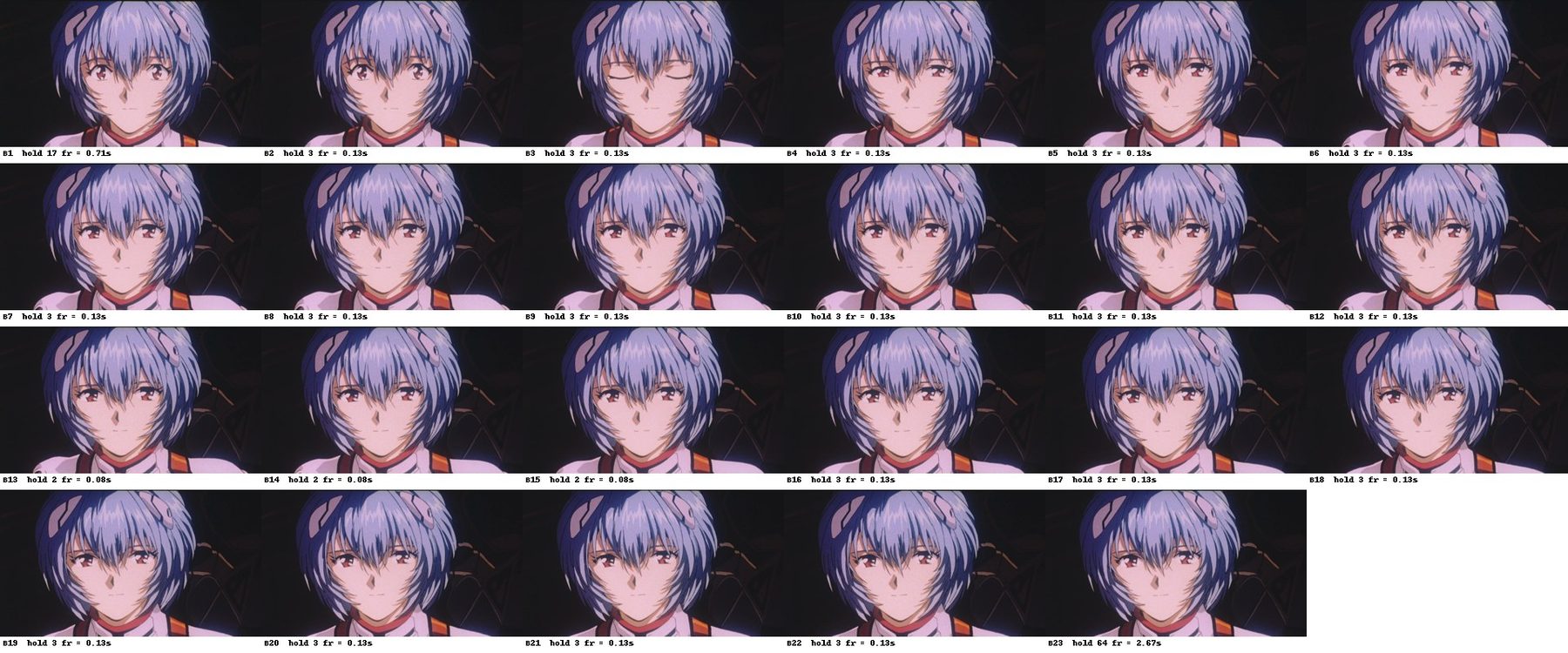
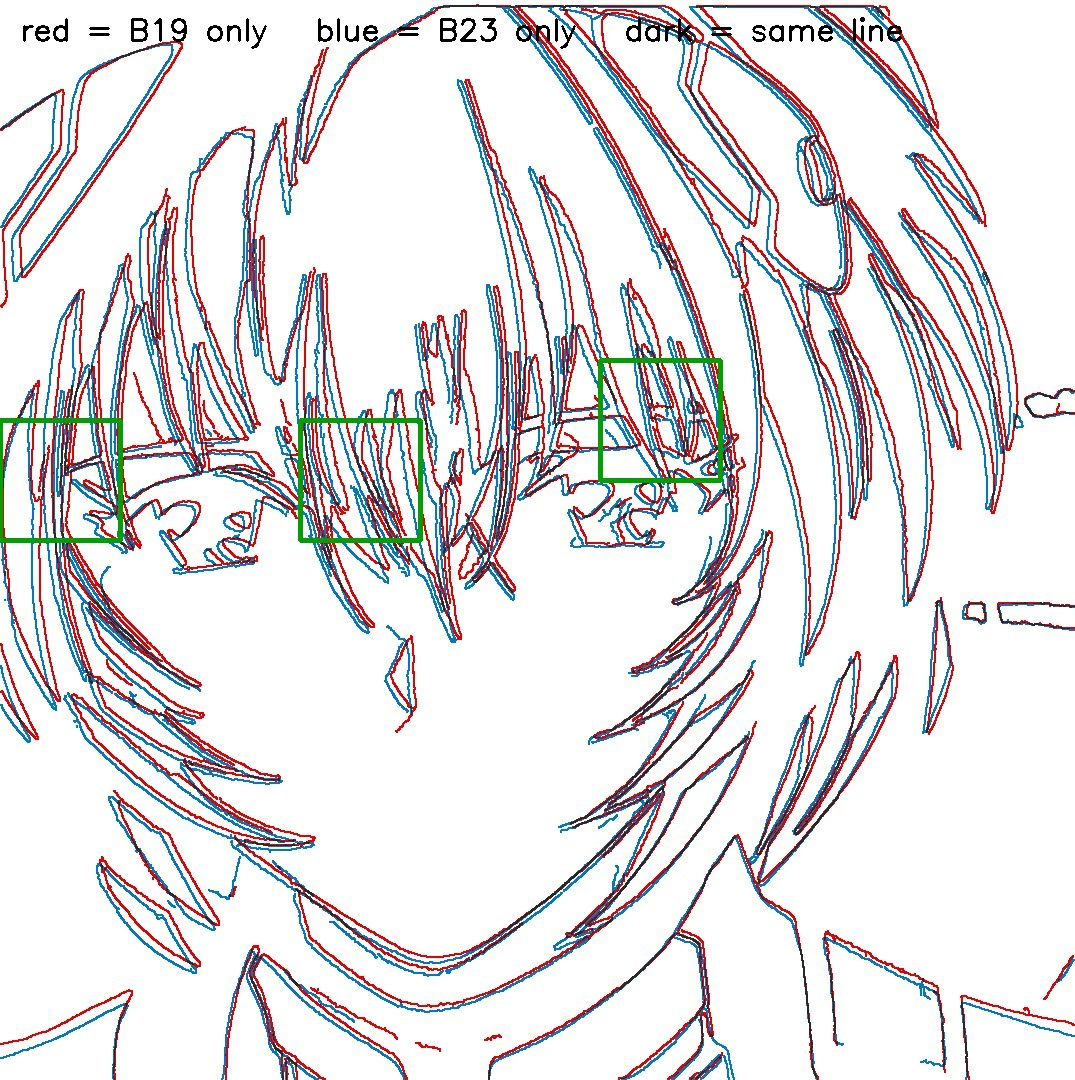
Every drawing is a whole new Rei head. Rei turns her face as she smiles, the hair swings, and the eyes narrow. There are twenty-three production cels photographed for the film, all real. The B19 that sold is on screen for an eighth of a second.
But B19 and B23 look the same, don't they? They're not. Red: B19. Blue: B23.
B19's sales history
| Sale | When | Price |
|---|---|---|
| A Japanese auction house, with certificate | May 1, 2023 | ¥9,100,000 ($66,900 at ¥136 to the dollar that week), 166 bids |
| Heritage Auctions, lot 7380-16164 | October 22, 2024 | $13,200 |
| A US dealer, shop and eBay | listed November 6, 2024, still offered October 2026 | $38,000 in the shop, $42,000 on eBay, asking |
A dealer listed it fifteen days after the Heritage sale.
Where was it between 1997 and 2023? We don't know. That's normal for a cel, and it's also why this page exists.
So which one is real?
That's always the wrong question.
The Gainax reproduction is a real Gainax product. The SEGA prizes are real SEGA prizes. The fan cels said they were fan cels. Many people don't even know that Gainax released these reproductions, almost identical to production cels, back in the day.
All twenty-three production cels are real, and only one has ever surfaced in the wild.
You can't tell B19 from B20 by eye. From a photo, you can't tell the Gainax B23 from a production cel either. A number in the corner proves someone wrote a number in the corner.
What goes with a cel from one sale to the next is the record: what was examined and what was recorded by someone who was there and knows the history.
Know before you bid or buy.
Bid & buy Japanese collectibles through Rinkya, since 2001. Put what you own on the record with Rinkya Authentic.
Copyright notice. NEON GENESIS EVANGELION: DEATH & REBIRTH (1997): ©カラー/EVA製作委員会. Images reduced, for comparison and commentary only; they remain their owners' property. Auction and sale photographs are from the public listings.